Featured
Table of Contents
That maximizes cash in the brief term, and you might have 3 to 4 years to conserve toward the settlement amount. Really hazardous to credit history, mainly as a result of missed settlements and a negative "settled" mark that can remain on your debt record for as much as seven yearsMay be only choice if various other options (debt consolidation, equilibrium transfer bank card, financial obligation mercy) aren't possibleTypically requires a fee to the 3rd party, which could counter some or all of the savings from debt settlementMay assist you stay clear of bankruptcy if you have actually missed numerous paymentsNot all creditors work with debt negotiation companies Debt mercy may be appropriate for you if you are experiencing an economic difficulty that makes it virtually impossible to pay down your financial obligation equilibriums.
With a DMP, you make one regular monthly payment to the credit score counseling firm. Those funds are then dispersed to creditors of your unsafe debts, such as debt cards and installment loans. The firm deals with your financial institutions to minimize rate of interest or forgo fees, but some lenders might decline such giving ins.
It can help you pay down financial debt if you're able to safeguard a lending rate that's lower than the ordinary rate of the accounts you're combining. You need to avoid from racking up debt on those freshly removed accounts or your debt could expand also greater.
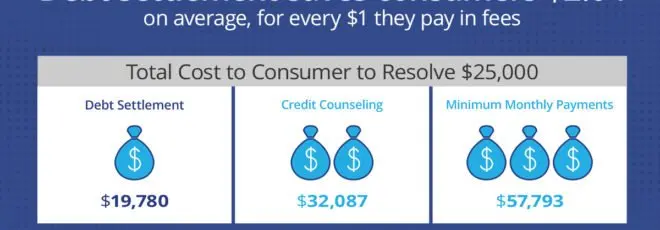
That provides you plenty of time to remove or dramatically reduce your equilibrium while making interest-free settlements.
6 Simple Techniques For Your Introduction to Debt Counseling and What to Ask
You may require it if your financial institution or a collection firm ever tries to collect on the financial obligation in the future. The letter can show you do not owe what the collection agency's records reveal. Yes, for the most part, the internal revenue service thinks about forgiven financial obligation as taxable revenue. When a lender forgives $600 or more, they are called for to send you Type 1099-C.
Financial debt forgiveness or settlement generally harms your credit history. Anytime you settle a financial debt for much less than you owe, it may show up as "worked out" on your credit record and influence your credit history for seven years from the date of settlement. Your credit score can also go down considerably in the months resulting in the mercy if you drop behind on payments.
The Main Principles Of Expert Guidance Protects What You've Worked For
Tax financial obligation concession programs Tax debt occurs when the quantity of tax obligations you owe exceeds what you have paid. This circumstance commonly arises from underreporting earnings, not submitting returns in a timely manner, or inconsistencies found during an IRS audit. The repercussions of accumulating tax debt are severe and can consist of tax liens, which offer the IRS a lawful claim to your building as safety for the financial debt.
Greater rate of interest on readily available credit score. Wages and Financial institution Accounts IRS can impose (confiscate) salaries and bank accounts to satisfy the financial debt. Lowered revenue and disturbance of essential monetary processes. Residential property Seizure In severe instances, the IRS can take and sell building to cover the debt. Loss of valuable assets and potential displacement.
Social Stigma Facing legal action from the Internal revenue service can bring social preconception. Work Opportunities A bad credit scores rating due to tax debt can limit work opportunities. Federal government Benefits Tax obligation debt might affect qualification for federal government benefits, such as Social Safety And Security and Medicaid.
The Greatest Guide To Credentials Standards from the Industry
The OIC considers numerous aspects, consisting of the taxpayer's earnings, expenditures, possession equity, and ability to pay. Successfully discussing an OIC can be complicated, needing a thorough understanding of the internal revenue service's standards and a strong disagreement for why your offer aligns with your ability to pay. It's essential to note that not all applications are accepted, and the procedure requires in-depth monetary disclosure.
The internal revenue service examines your general monetary scenario, including your earnings, expenses, property equity, and capability to pay. You should likewise be existing with all filing and settlement requirements and not be in an open bankruptcy case. The IRS likewise considers your conformity history, reviewing whether you have a document of prompt filing and paying tax obligations in previous years.
How Prevalent Myths Regarding How to Use Credit Cards Wisely to Avoid Debt : APFSC can Save You Time, Stress, and Money.
The application procedure for an Offer in Compromise entails numerous in-depth actions. You have to finish and submit Internal revenue service Type 656, the Deal in Concession application, and Kind 433-A (OIC), a collection details declaration for individuals. These kinds require thorough monetary info, including details about your income, financial debts, expenditures, and properties.
Back taxes, which are unpaid taxes from previous years, can considerably increase your overall IRS debt if not addressed without delay. This financial debt can build up interest and late repayment charges, making the original quantity owed much larger gradually. Failing to pay back taxes can lead to the IRS taking enforcement actions, such as releasing a tax obligation lien or levy versus your property.
It is essential to address back tax obligations as soon as feasible, either by paying the total owed or by organizing a settlement plan with the internal revenue service. By taking proactive actions, you can avoid the buildup of additional rate of interest and penalties, and avoid more hostile collection activities by the internal revenue service.
One common factor is the belief that the taxpayer can pay the total either as a round figure or with a layaway plan. The internal revenue service additionally thinks about the taxpayer's income, costs, possession equity, and future earning capacity. If these factors suggest that the taxpayer can afford to pay even more than the used quantity, the IRS is most likely to decline the offer.
A Biased View of Private How to Use Credit Cards Wisely to Avoid Debt : APFSC Options Reviewed
Dealing with IRS financial debt can be complicated and complicated. Tax obligation professionals, such as Certified public accountants, tax obligation lawyers, or enlisted representatives, can give vital assistance.

Table of Contents
Latest Posts
What Does Exploring Financial Fresh Starts and How It Works Do?
3 Easy Facts About What the Law Says When Pursuing Bankruptcy Counseling Shown
The Greatest Guide To Value vs Going It Alone Methods
More
Latest Posts
What Does Exploring Financial Fresh Starts and How It Works Do?
3 Easy Facts About What the Law Says When Pursuing Bankruptcy Counseling Shown
The Greatest Guide To Value vs Going It Alone Methods